Price the job

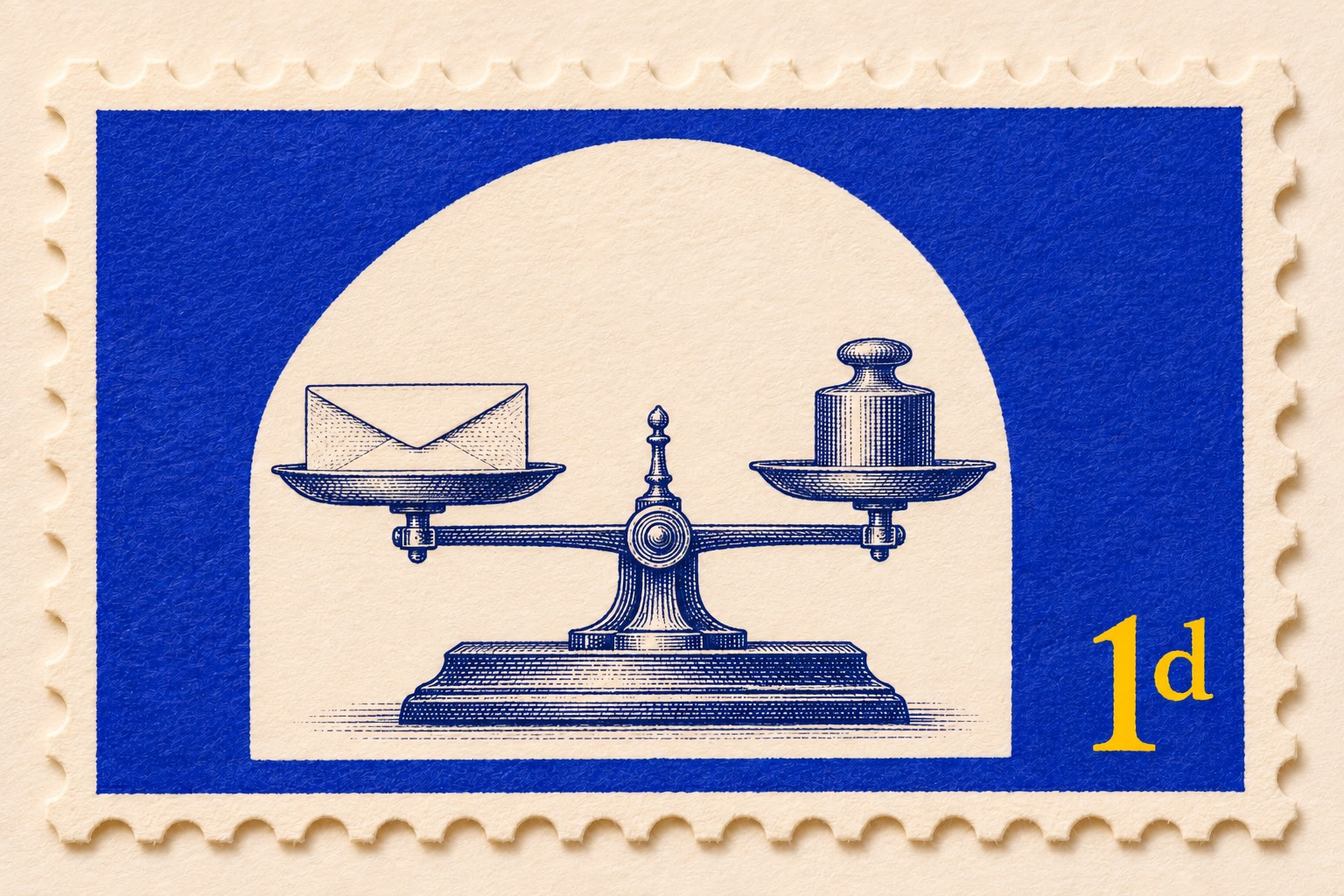
On January 10, 1840, Britain put one price on a letter. A penny carried half an ounce anywhere in the kingdom. Before that reform, a clerk priced each letter by its sheets and its miles.
Rowland Hill, who proposed it, had priced the job. I worked on pricing projects at Monitor Group from 2002 to 2006, and I’d price accounting work the same way.
A price for the job keeps the hours software saves. An hourly bill hands each one to your client.
Your bookkeeping clients may already pay by the month. That looks like a price for the job, as long as the fee holds when the hours fall.
An hourly invoice falls with its hours. In the AICPA’s 2025 survey of more than 1,400 firms, 63% used hourly billing, the most common method. “The scourge of our world,” an owner told me in October, “is that everybody still thinks in hours.”
A fixed fee can fall too, a year late. If you rebuild next season’s quote from hours times rate, this season’s savings come off it.
I have a stake in this. I’m a co-founder of United Accountants. We buy majority stakes in accounting firms, and our AI agents prepare their clients’ books.
The owner I quoted earlier estimated that AI tools like the one his firm used on its tax workflow could cut headcount at a high-volume shop by 30% to 40%. If automation brought his firm another $1,000 of revenue for thirty minutes of a person’s time, he said, “I like making $2,000 an hour.”
No timesheet could bill that rate. On a fixed fee, the client pays for the job, and you earn the full fee in fewer hours. The saved hour turns into money once you sell it again or stop paying for it.
Move every recurring client still on the clock to a fixed monthly fee. That owner was doing it when we spoke. Most of his bookkeeping clients paid a flat monthly fee, he said, and he had told others on time and materials that they were moving to one too.
Hill’s penny came with a limit: half an ounce, and a heavier letter paid more. A monthly fee needs its half ounce in writing, such as the accounts you reconcile and the day you close. Anything beyond has its own price.
Hill’s reform also set the price low. A committee of Parliament had recommended twopence in 1838, and Britain went to a penny.
Letter volume quadrupled by 1847, a Post Office official’s 1917 history records. Net revenue still took decades to recover from a fall of a million pounds. Change the structure, and hold the price.
A client’s first monthly fee can be a twelfth of the last twelve months of fees for the same work. Every hour saved before the switch has already lowered those fees, so switch early. A client you undercharged gets a new fee at the switch.
The price gets its own test after the switch. On tax work, that owner had moved his minimum for an individual return from $650 to $850 in two steps, he told me, and “nobody’s blinked.”
Clients will claim some of the gain from saved hours, and rivals may set the pace. On a fixed fee, that gain stays yours unless you decide to give it up. The Post Office, a monopoly, held its penny and still gave more for it: an ounce from 1871, four ounces from 1897. When a rival quotes less, you can give more for your fee before you cut it.
The saved hour turns into money once you sell it again.
Advisory is the hard case, since nobody knows its weight in advance. Keep the first step small enough to weigh: one question, answered in writing and on one call. The next step gets its own price before it starts.
As a buyer, I check that your fees hold when your hours fall. If they fall too, new work first replaces the revenue you gave away. Only what you win after that is growth.
What is the half ounce in your monthly fee?
The Owners’ Room
Our monthly letter for accounting firm leaders.
The sign-up form comes from beehiiv and sets cookies. See our privacy policy.